

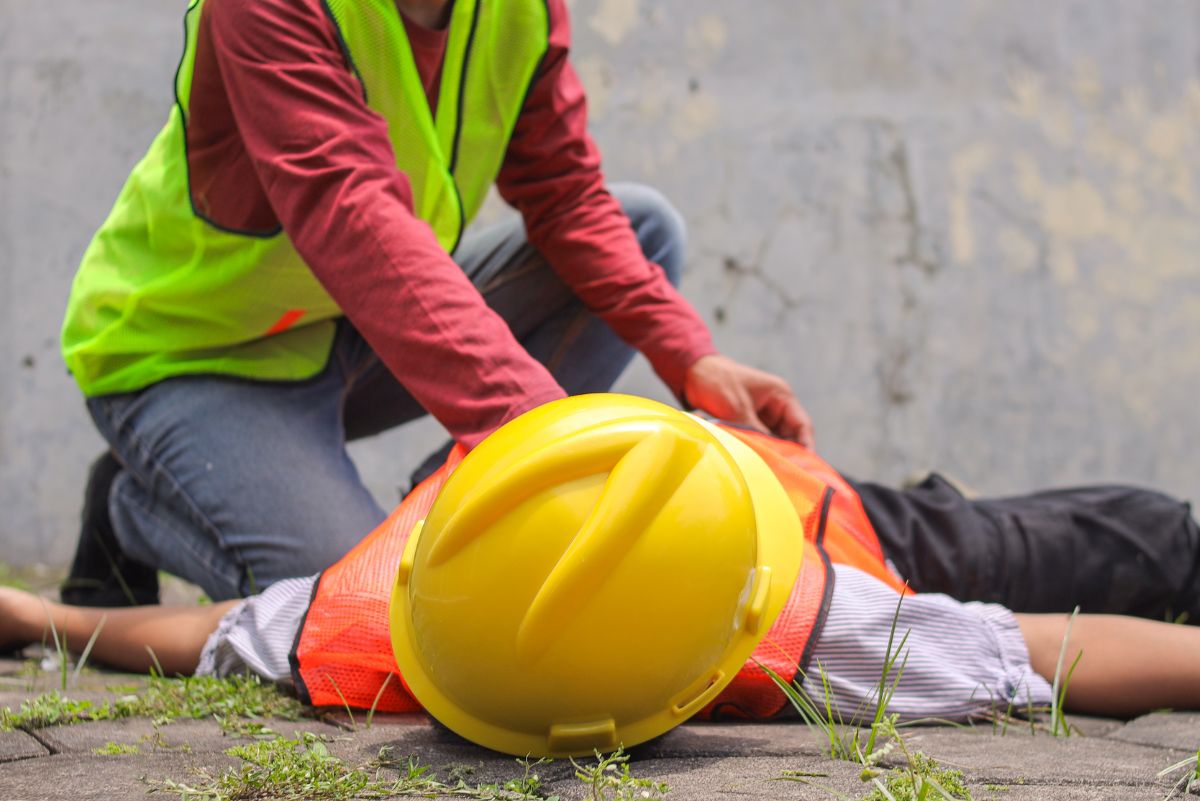
Plenty of people can tell you what HIRA stands for. Fewer can show you what it actually looks like in a real workplace. That's the gap that gets people hurt.
Understanding the HIRA meaning in safety goes beyond knowing the acronym. It means being able to walk onto a construction site, a factory floor, or into an office and identify what could go wrong, who's at risk, and what needs to change. The OHS Act (Act 85 of 1993) requires employers to do exactly this. The Department of Employment and Labour expects it to be done properly, not just documented.
This article uses real workplace scenarios to show you how the hazard identification and risk assessment procedure works in practice. Because HIRA only protects people when it's understood, not just completed.
HIRA’s Meaning in Safety
HIRA stands for Hazard Identification and Risk Assessment. But it's more than an acronym. It's a decision-making process. You identify what could cause harm, evaluate how likely that harm is, determine how severe the consequences would be, and then decide what controls to put in place.
Think of the hazard identification and risk assessment procedure as a structured way to think through risk before it becomes an incident. It's not a document. It's a discipline.
How HIRA Works in Practice: A Simple Framework
The approach is straightforward. Identify the hazard. Assess the risk. Apply controls. Review.
Controls follow a hierarchy: eliminate the hazard if possible, substitute it with something safer, engineer controls like guards or barriers, implement administrative measures like training and procedures, and as a last resort, use personal protective equipment. Every scenario that follows uses this lens.
Scenario 1: A Construction Site
Workers are installing roofing at height.
- The hazard: fall from height.
- The risk: severe injury or fatality. The likelihood is high given the elevation and exposure.
- Controls: guardrails installed along all edges, workers fitted with fall-arrest harnesses, toolbox talk conducted before the task begins.
The hazard identification and risk assessment procedure is applied in real time, matching specific controls to a specific task. In high-risk environments, this level of detail saves lives.
Scenario 2: The Manufacturing Floor
An operator works alongside a machine with exposed moving parts.
- The hazard: entanglement.
- The risk: injury to hands or limbs, potentially catastrophic.
- Controls: machine guarding over all moving parts, lockout/tagout procedures during maintenance, mandatory PPE including close-fitting clothing.
A HIRA risk assessment conducted properly ensures these controls are documented, assigned, and reviewed. Not assumed.
Scenario 3: The Warehouse Environment
Staff lift and move heavy stock manually throughout the day.
- The hazard: improper lifting techniques.
- The risk: musculoskeletal injuries that develop over time and sideline workers for weeks.
- Controls: training on correct manual handling, mechanical aids like trolleys and pallet jacks, task rotation to limit repetitive strain.
This hazard identification and risk assessment example shows that HIRA applies to everyday tasks, not just dramatic high-risk scenarios.
Scenario 4: An Office Environment
Desk-based employees sit for eight hours a day at poorly adjusted workstations.
- The hazard: poor ergonomics and prolonged sitting.
- The risk: chronic back pain, eye strain, and long-term musculoskeletal issues.
- Controls: ergonomic assessments, adjustable chairs and desks, regular screen breaks, workstation setup training.
HIRA safety isn't reserved for hard hats and high-vis. It applies everywhere people work.
What These Examples Reveal About HIRA Safety
Three patterns emerge. First, HIRA is adaptable. The same framework applies to a rooftop and an office desk. Second, the quality of hazard identification determines everything. Miss the hazard and every step after it fails. Third, controls work best when they're layered. One measure alone is fragile. Multiple controls supporting each other create real protection.
These hazard identification and risk assessment examples prove that HIRA is practical, not theoretical.
Common Gaps When Applying HIRA in Real Workplaces
The most common failures are predictable. Hazards get missed because nobody walked the floor. Risk levels get underestimated because assessors lack experience. Controls sound good on paper but don't get implemented. The hazard identification and risk assessment procedure gets followed mechanically without real understanding.
These gaps are exactly why incidents still happen in workplaces that technically "have a HIRA."
Why Training Is Essential to Apply HIRA Correctly
Scenarios on a page aren't enough without proper guidance. Your team needs training to identify less obvious hazards, conduct a HIRA risk assessment accurately, select effective controls, and meet OHS Act requirements with confidence.
Training builds three things: recognition (spotting hazards others miss), buy-in (understanding why controls matter), and culture (safety becomes how your team works, not something imposed on them). The QCTO recognises formal OHS training for good reason. It works.
What to Expect from Professional HIRA Training
From professional HIRA training you can expect practical, scenario-based learning aligned with real workplaces. Experienced facilitators with industry knowledge. Flexible delivery, onsite or online. OHS Act compliant training with certification.
The focus is on applying HIRA beyond theory. Your team practises identifying hazards, rating risks, and selecting controls using situations they'll actually face. They leave with the ability to make HIRA work, not just fill in a form.
HIRA Is Only Effective When It’s Understood in Practice
Understanding what is HIRA in safety starts with seeing it in action. Not in a textbook. Not on a template. In your workplace, with your hazards, assessed by your people.
HIRA's meaning in safety comes down to one thing: protecting people through understanding, not just paperwork.
DDi Group provides practical HIRA training that equips South African teams to identify hazards, assess risks, and apply controls that actually work. We use real-world hazard identification and risk assessment examples tailored to your industry. Ready to make HIRA real in your workplace?
Contact the DDi Group today.

 Hazard Identification and Risk Assessment (HIRA): The Process, Legal Requirements, and Why Training Matters
Hazard Identification and Risk Assessment (HIRA): The Process, Legal Requirements, and Why Training Matters
 Incident Investigation in the Workplace: Process, Purpose, and Why Proper Training Matters
Incident Investigation in the Workplace: Process, Purpose, and Why Proper Training Matters