









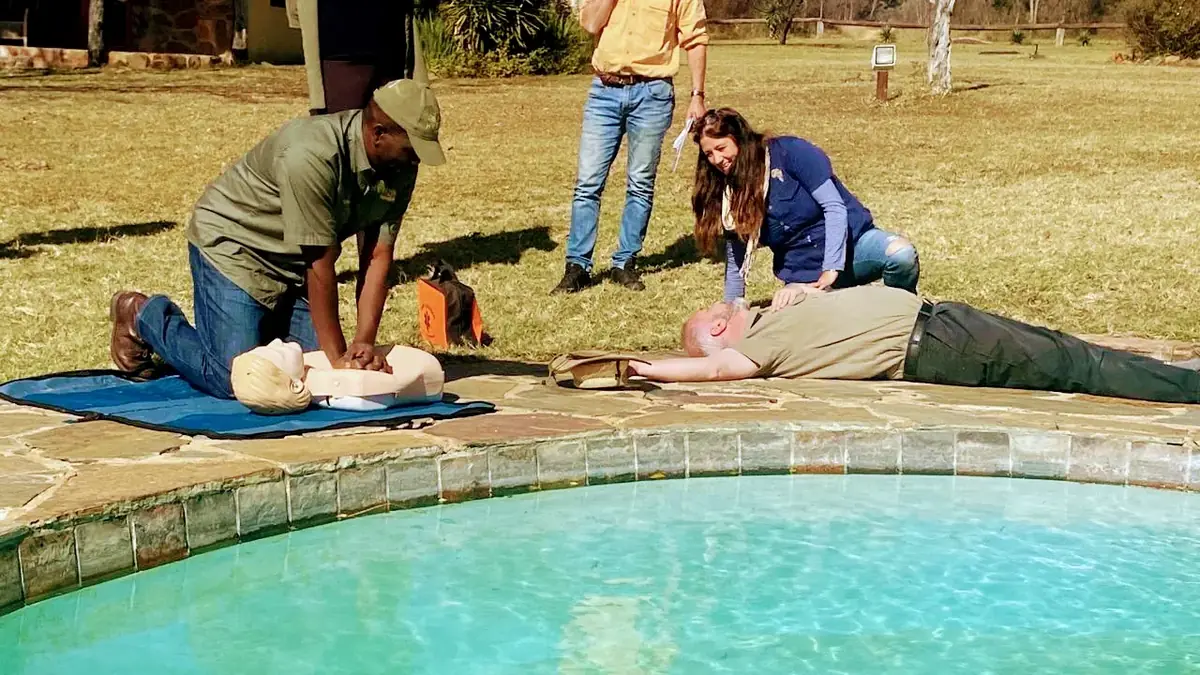
With the move to the QCTO, First Aid Level 1, 2 and 3 were renamed Basic, Intermediate and Advanced Emergency First Aid Responder, and adult, child and infant CPR, choking and the AED are now taught on all three levels. The rules for providers changed too: a training provider must be accredited with the QCTO, or hold Stage 2 legacy accreditation with a SETA, before the Department of Employment and Labour approves it to present first aid compliance training. Here is what that means for you.
New names for the three levels
On 1 July 2024 the QCTO curricula replaced the old first aid levels. Most people still say Level 1, 2 and 3, so we use both names.
| Old name | New name |
|---|---|
| First Aid Level 1 | Basic Emergency First Aid Responder |
| First Aid Level 2 | Intermediate Emergency First Aid Responder |
| First Aid Level 3 | Advanced Emergency First Aid Responder |
Adult, child and infant CPR on every level
Before the change, Level 1 taught adult CPR only, and child and infant CPR started at Level 2. Now the Basic, Intermediate and Advanced courses all cover CPR for adults, children and infants, which is very important: an emergency doesn't check which level you did. Choking is still taught on all the levels, as before.
The AED on every level
The AED (automated external defibrillator) is now part of all three levels, so every delegate practises on an AED trainer, from Basic to Advanced.
Who may present first aid compliance training
A provider must first be accredited with the QCTO, or hold Stage 2 legacy accreditation with a SETA. Only then can it be approved by the Department of Labour to present the Department of Labour compliance training. DDi's First Aid Level 1 to 3 training is accredited by the Department of Labour and aligned to the QCTO curriculum, and on successful completion each delegate receives a Certificate of Compliance which is valid for 3 years.
What your certificate shows
A first aid compliance certificate carries the provider's Department of Labour approval number, and that's it. It doesn't carry a Department of Labour logo, because the Department doesn't give permission to use it, and it doesn't carry a QCTO logo, because the QCTO prints its own certificates for QCTO qualifications. So neither logo goes on a DDi certificate.
And a certificate is earned, not bought: you receive it only when you are found competent, with the knowledge, the skill and the ability to apply it.
Is the new course any good?
Yes. It is a very solid, quality course, and it should equip people to really apply what they learn. It doesn't matter whether they did the Basic or the Advanced: they can really make a difference.
Which level does your workplace need?
Your risk assessment determines the level. Most workplaces start with First Aid Level 1 (Basic Emergency First Aid Responder); higher-risk sites add Level 2 or Level 3. Appointing SHE Reps at the same time? See SHE Rep Training. Want certificate dates, appointments and your safety file looked after for you? That is what OHS Navigator does.
The course for this topic
Public class R1,050 per person, or onsite from R730 per person for 20 or more (R950 for 4 to 9), excl. VAT.
For the people you appoint as workplace first aiders: CPR, choking, bleeding, burns and fractures, practised hands-on.

Stephan writes and reviews the DDi OHS blog. About DDi OHS