







Get a quote

Basic Fire Fighting Training
Basic Fire Fighting

Basic fire fighting training at your home, school or workplace in Pretoria & Johannesburg.

★★★★★ 4.9 from 257+ Google reviews Based in Centurion. Onsite across Gauteng, and anywhere in South Africa with travel quoted.
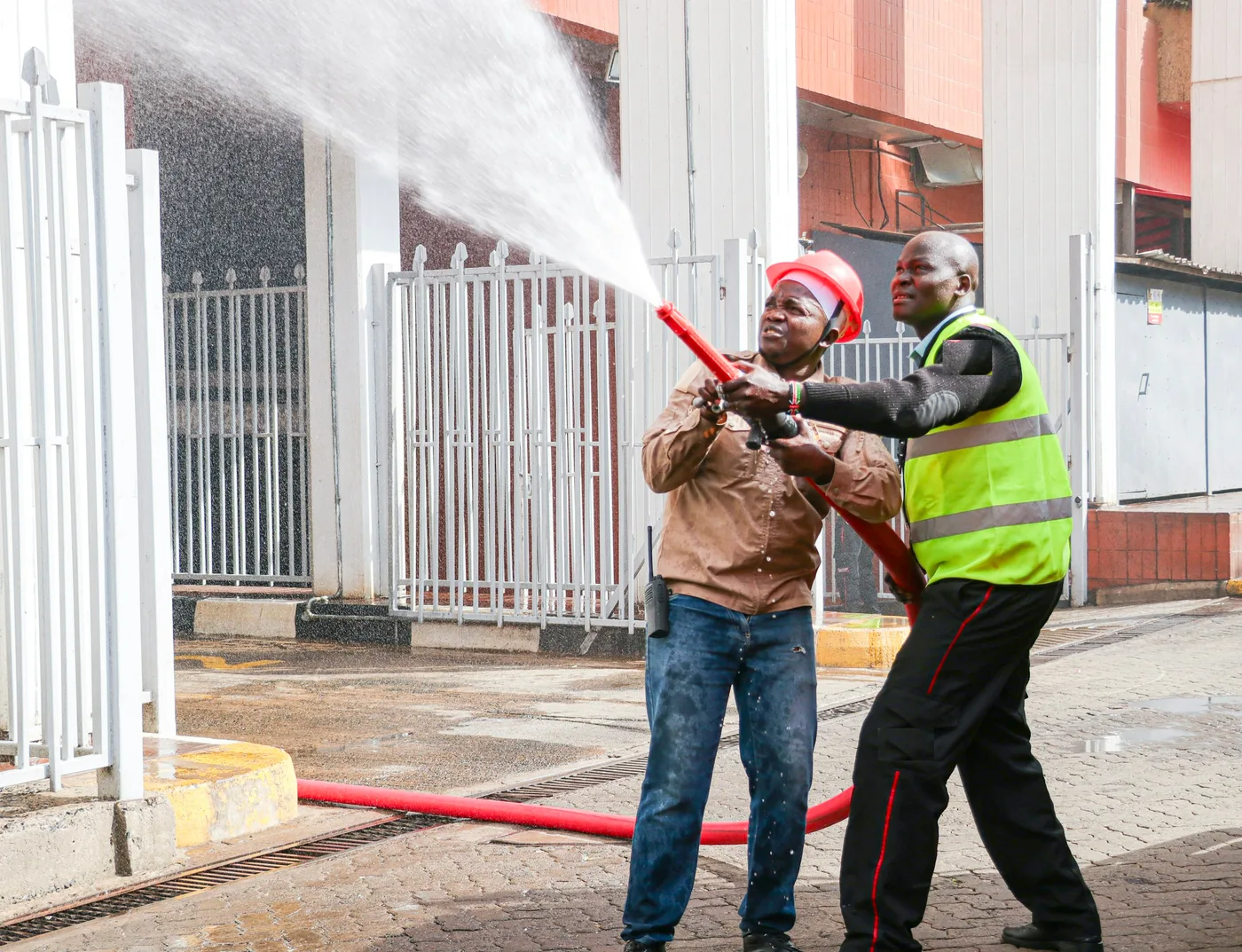
A trainer in a hi-vis vest steadying a trainee in a red hard hat as they aim a fire hose
OHS Act compliant
training
4 hourshalf a day, theory and practical
R890public class, per person
from R605per person onsite, groups of 20 or more (R790 for 5 to 9), excl. VAT

Benefits of Working With DDi

  • OHS Act compliant training

    Certified first aiders, SHE reps and fire teams, so your OHS Act boxes are ticked.

  • We come to you, or join a public class

    We handle the admin, and train at your workplace, in Centurion or online.

  • Facilitators with real-life experience

    Facilitators with real emergency experience, who answer every question.

  • Lekker interactive, never boring

    Engaging, clear and fun, so people stay switched on all day.

  • Practical, hands-on learning

    Everyone discharges a real extinguisher, and learns to spot a faulty one.

  • Same-day certificate

    Signed onsite at the end of the training, for every delegate found competent, when we have their ID copy beforehand.

4.9from 257+ Google reviewsRead all reviews

“… The hand outs are amazing quality; the instructor was extremely knowledgeable and patient. …”

Janice CloeteGoogle review

“… My employees were completely satisfied with the approach and how the lesson was conducted. …”

Shernell ArnachillanGoogle review

“… Will definitely be using them in the future for all our First Aid and Fire Fighting training.”

Deon VisserGoogle review

Basic Fire Fighting Training

Basic fire fighting training at your home, school or workplace in Pretoria & Johannesburg. This is fire fighting training for employees and workplaces, not a career firefighter course.

Course Information

Course Details

Why Basic Fire Fighting Training?

Basic Fire Fighting is about learning the fundamentals of how fires act, and how one should react. Your staff will be prepared to manage and extinguish workplace fires with the correct protocols and skills.

Benefits of Basic Fire Fighting Training

  • Needed for compliance to the Occupational Health & Safety (OHS) Act.
  • Having employees with the know-how and confidence on how to effectively fight workplace fires to protect co-workers and company property.

Why your employees need fire fighting training

Fire can strike at any time, and without the proper training it can have devastating consequences. Fire spreads quickly, often leaving little time to react. When employees are trained in basic fire fighting techniques, they can respond swiftly and effectively. Not only can this save lives, it can also minimise damage to property, so the business remains operational.

The training is reactive and pro-active. Besides fighting a fire, it focuses on preventing fires and identifying possible risks that could be reduced or even eliminated.

What employees learn

  • How fires start: fire needs three elements, heat, fuel and oxygen, often called the “fire triangle”. Fire fighting means disrupting the triangle by removing one or more of them.
  • How to extinguish a fire: by cooling the heat, cutting off the oxygen supply or eliminating the fuel source. Water can cool a fire but is not suitable for all fire types, and the wrong technique can make the situation worse.
  • Classes of fire and the right extinguishing agent:
ClassFuelExtinguishing agent
ASolid materials such as wood, paper or textilesWater, foam, dry chemical powder or wet chemicals
BLiquids like petrol, oils or paints, and flammable gases such as propane or butaneGaseous suppressants (like CO₂), foam or dry chemical powder
CElectrical equipment like computers, wiring and machineryNon-conductive agents like CO₂ or dry chemical powder
DMetals like magnesium and aluminiumSpecialised dry chemical powders
KCooking oils and fatsWet chemical extinguishers
  • Fire prevention, the best defence: regular maintenance of electrical equipment, safe handling of flammable substances, keeping workplaces clean and free from fire hazards, and proper storage of combustible materials.
  • Fire equipment: smoke detectors, fire extinguishers, fire blankets, fire hoses and sprinkler systems, and how to care for and inspect them so they work when needed most.
  • Safety signs: exit markers, fire extinguisher locations and assembly points, so employees can follow them without panic or confusion.
  • How to operate fire equipment: hands-on practice, from pulling the pin on a fire extinguisher (the PASS method) to using a fire hose.
  • Evacuation procedures: the quickest and safest escape routes, assembly points with a roll call to account for everyone, and how to assist others, including those with disabilities or injuries.
  • Planning for fire emergencies: clear evacuation procedures, regular fire drills (how to run a fire drill and how often) and designated fire marshals.

Fire safety legislation: Act 85 of 1993 and regulation 13J

In South Africa, fire fighting training is not just good practice. The Occupational Health and Safety (OHS) Act (Act 85 of 1993) requires employers to ensure their employees are trained to deal with fire hazards, and the General Safety Regulations, regulation 13J (2025), further specify the fire equipment and safety measures required in workplaces. Training your employees helps your business comply with these laws, protecting both your people and your organisation. Read more on fire prevention vs fire fighting training.

Who is this course for?

  • Businesses
  • Schools, colleges and universities
  • Event organisers

Got questions about our fire fighting course?

Connect With Us

Many people say they've done fire fighting many times before, so what can they learn? We keep the course updated, for instance on the new lithium batteries and the new types of extinguishers, so there's something new every time. For first-timers we keep it simple: the PASS method, the classes of fire and which extinguisher to use.

From our facilitators

In the classroom

What the day looks like

A balance of theory and practical, because competence is the knowledge, the skill and the ability to apply it in a real-life scenario. First time? Don't stress: we take you through the process.

  1. Registers and enrolment: attendance registers signed and enrolment forms completed.
  2. Theory: the classes of fire, which extinguisher for which fire, and the PASS method (pull, aim, squeeze, sweep).
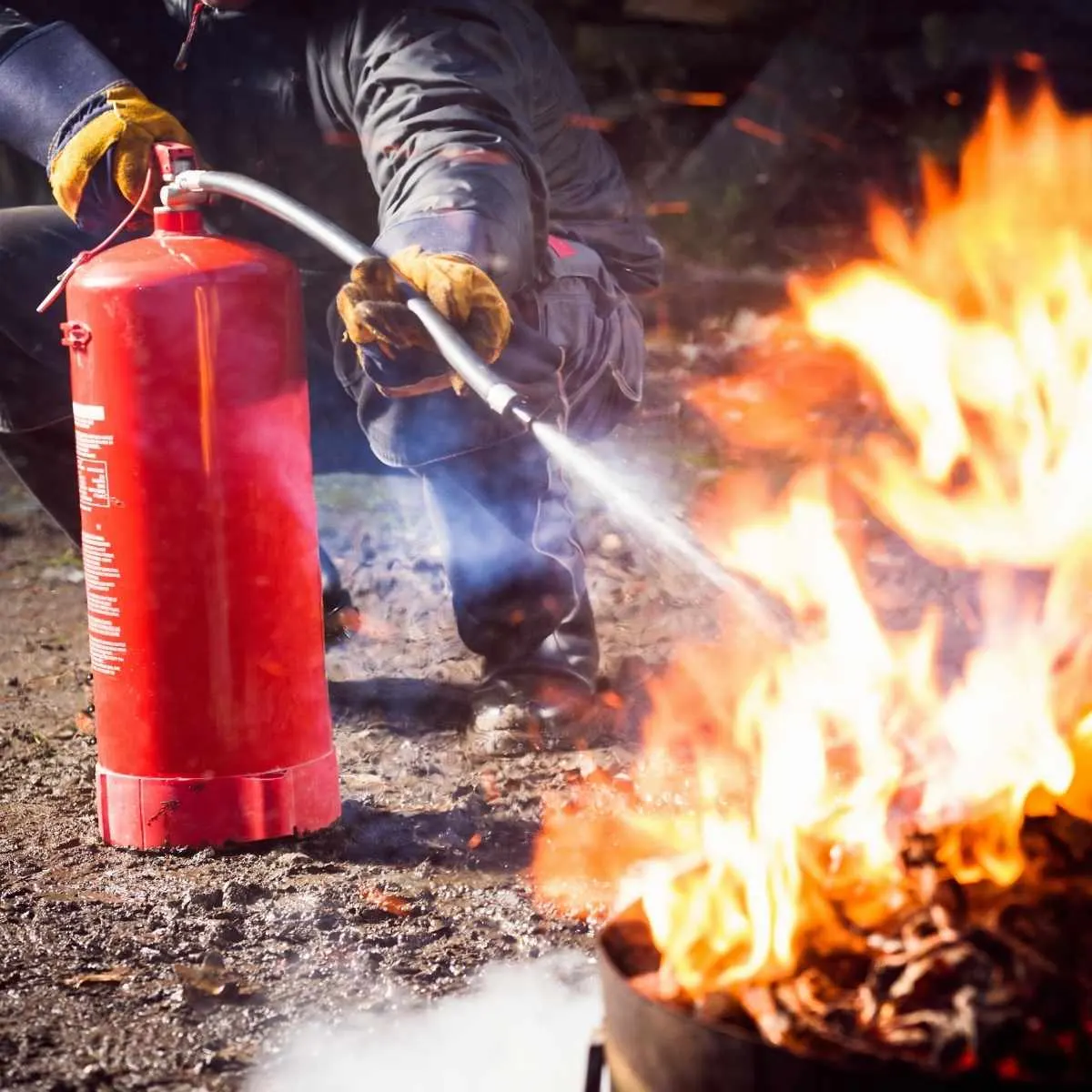
  3. Practical: we show you the equipment, and everyone discharges a real extinguisher, so you know there is no explosion, just a release of dry chemical powder. We don't light open fires.
  4. Inspecting extinguishers: some of ours are faulty on purpose, so you learn to spot the problems.
  5. A practical assessment, then a short theory assessment, signed by the assessor.
  6. Certificates signed onsite once the assessor and facilitator are happy (we need your ID copy before the training).

Book Basic Fire Fighting

What you practise on

  • CO2 and dry chemical powder (DCP) extinguishers, and how to check them
  • Some full and some damaged on purpose, so you learn to spot the problems when you inspect them
  • The PASS method on a real extinguisher: pull, aim, squeeze, sweep

Calculator

How many fire fighters do I need?

DDi's recommendation, from your risk assessment, for one site.

Type a number, or step by 10. Count everyone who works at this site.

DDi's recommendation, from your risk assessment

No regulation sets a number of fire fighters. DDi recommends 3 for every 50 staff: they work in teams, and one can be absent.

Reviewed by Stephan Heyneke, Director, DDi, 27 Oct 2026. This is a guide, not legal advice: your risk assessment, shifts and site layout may call for more. Your internal policy matters too: one trained person on leave can leave a shift with no cover.

Book Basic Fire Fighting

Next public classes

Basic Fire Fighting dates and seats

At 99 Hornbill Avenue, Rooihuiskraal, Centurion. Pick a date, pay securely by PayFast and you are confirmed.

Public class dates are loading...

All open dates and seats: book a public class online.

Course outline

Basic Fire Fighting course outline

Part 1, 12 topics

Basic Fire Fighting

  1. Introduction to fire and basic fire fighting
  2. The basics of fire
  3. How to extinguish a fire
  4. Classes of fire
  5. Fire prevention
  6. Fire equipment
  7. Safety signs
  8. Care and maintenance of equipment
  9. How to operate fire equipment
  10. Evacuation procedures
  11. Fire safety legislation: OHS Act 85 of 1993 and General Safety Regulation 13J
  12. Planning procedures for fire

Prices

What Basic Fire Fighting costs

Public class prices are the final amount per person. Onsite prices, small groups and travel exclude VAT. Book a seat in a public class, or we train your group at your workplace.

Public class

R890per person, Centurion

At your workplace

Per person, excl. VAT
  • 5 to 9 peopleR790
  • 10 to 19 peopleR695
  • 20 or more peopleR605
30 or more? Ask us, bigger discounts apply.

Smaller groups onsite

1 to 2 people R2,350, 3 people R2,800, 4 people R3,250 (flat)Travel R550 flat up to 100 km round trip, then R5.50 per km.

Every course on one page: Course Prices 2026, or download the price list (PDF).

Instant estimate

What will it cost?

Pick the course and how many people. Public class seats are the final amount; onsite prices exclude VAT and travel.

Where?

Your estimate

R0

Request a quote An estimate from our 2026 rate card, not a quote. Every course page shows its full prices.

Two ways to train

One person, or the whole team

Individuals join a public class at our Centurion venue, or online for SHE Rep, HIRA and Incident Investigation. Groups are trained onsite at your workplace anywhere in South Africa, with travel and accommodation quoted outside Gauteng.

QCTO accredited training provider
Department of Employment and Labour approved first aid organisation
ECSI, Emergency Care and Safety Institute
Unashamedly Ethical
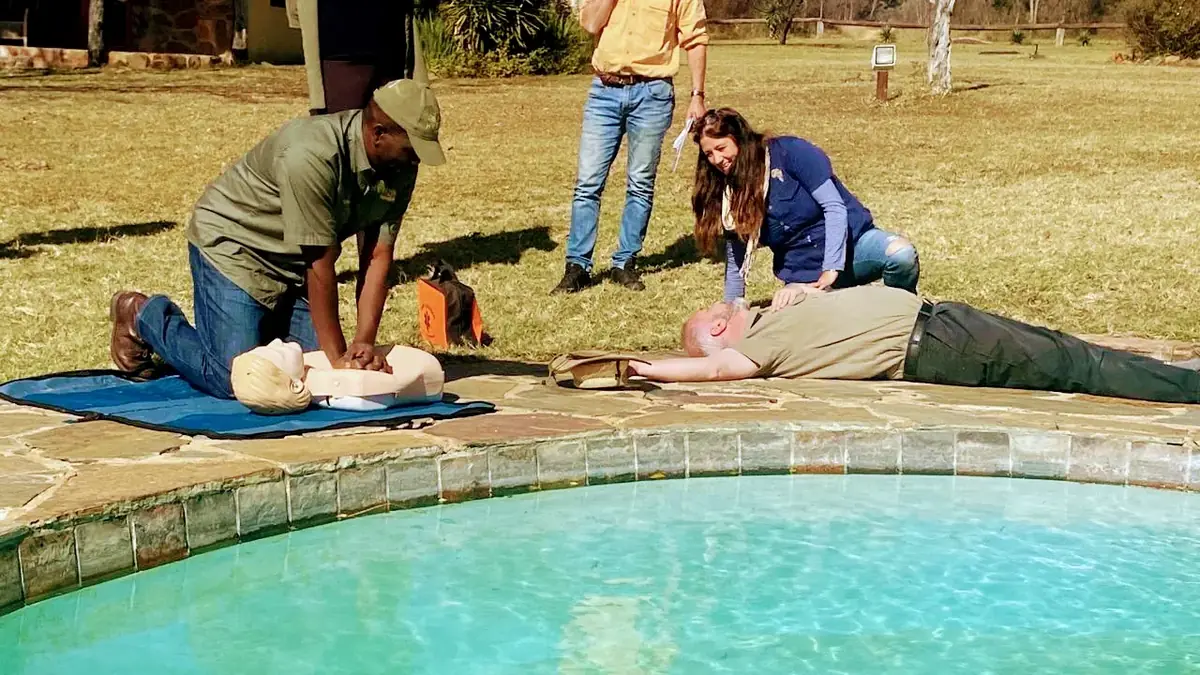
Learners practising CPR in an outdoor emergency scenario during a DDi class
Public class

Centurion or online

For individuals and small groups. See the dates and book online.

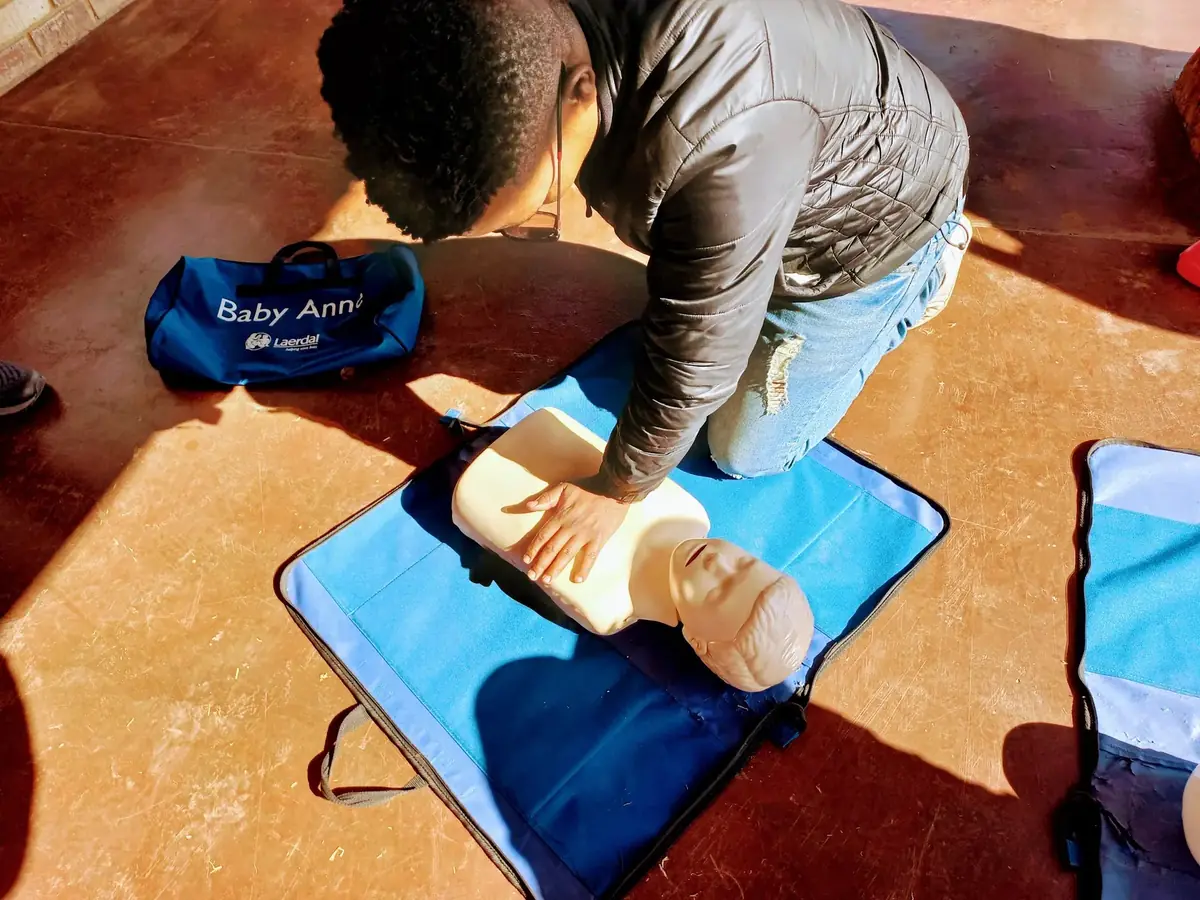
A learner practising CPR on a manikin during first aid training
Onsite

At your workplace

For groups, anywhere in South Africa.

Testimonials

What clients say

“In addition to their outstanding training services, they have consistently conducted our annual Health and Safety Audits for Definitive Conferencing, helping us maintain compliance with relevant health and safety requirements and uphold the high standards expected of our business.

We highly recommend Dynamic Development Institute to any organisation looking for a professional, reliable, and knowledgeable partner for health and safety training, audits, and compliance support.”

Tarryn VerdonDirector, Definitive Conferencing, Germiston
4.9★★★★★257+ reviewsRead all reviews

“Highly recommended! The basic first aid and fire fighting training sessions were engaging, practical, and highly informative. Our facilitator’s extensive knowledge and real-world experience made the safety concepts easy to understand. We had so much fun while learning!”

Antoinette Coetzee
We did our First Aid, Fire Marshal and SHE REP Training with DDi, service was extremely good and the feedback we received from staff regarding the quality of the training was exceptionally good. Thanks for great service. :-)
★★★★★Willie Cilliers
Very informative and interactive training session Nico is very knowledgeable in his field Thank you for the good organisation - everything ran smoothly
★★★★★Jackie Krüger

FAQ

Basic Fire Fighting FAQs

Anything else? Call 061 566 6010.

How long is the Basic Fire Fighting course?

4 hours (half a day), covering theory and a practical session.

Is fire fighting training required by law?

Yes. The OHS Act (Act 85 of 1993) requires employers to make sure employees are trained to deal with fire hazards, and the General Safety Regulations, regulation 13J (2025), set out the fire equipment and safety measures workplaces need.

Do delegates get hands-on practice with fire equipment?

Yes. Delegates practise operating fire equipment, from pulling the pin on a fire extinguisher (the PASS method) to using a fire hose.

Where does the course run and what does it cost?

Individuals join a public class in Centurion at R890 per person. For groups we train onsite from R605 per person for groups of 20 or more (R790 for 5 to 9), excl. VAT. For 30 or more people, ask us, bigger discounts apply.

Is this a course to become a firefighter?

No. Basic Fire Fighting is fire fighting training for employees and workplaces, not a career firefighter course.

How long is the Basic Fire Fighting certificate valid?

It depends on your company's internal policies, usually set in its health and safety file or SHE policy. DDi recommends refreshing Basic Fire Fighting every year.

Can we do first aid, fire fighting and SHE Rep in one day?

No. Each is a full one-day course with practical time and an assessment, so we book them on separate days.

Last updated

Get a quote

Book Basic Fire Fighting, for you or your team. We handle the rest.

Book in 3 easy steps

  • 01
    Enquire onlineSend your details for the quote, and the address for onsite training
  • 02
    Pay and secure your dateAccept the quote, then send proof of payment or an official purchase order
  • 03
    Learn at home or workOnce that is in, we book the facilitator and the date
061 566 6010
Quote requestStep 1 of 2

Step 1 of 2: What do you need?

What do you need?

Tick everything you would like a quote for, for yourself or your team.

Training

Tick every course you need. Not sure? Pick the closest and we'll advise.

First aid

Fire and emergency

OHS compliance

Skills Programmes

Services

Other

Where would you like to be trained?

Roughly is fine. If it's different per course, add it in the message.
What will it cost?
We'll confirm the date with you.

Or call us on 061 566 6010.